Daughters of the American Revolution (DAR) Museum Opens New Exhibit, Revolution in Their Words, Showcasing the Words of Ordinary People as They Experienced Events of the American Revolution
PR Newswire
WASHINGTON, March 18, 2026
New exhibit documents a range of voices from wealthy merchants to backcountry settlers including free and enslaved Black people, Native Americans, women, and soldiers on the front lines of the fight for America's freedom
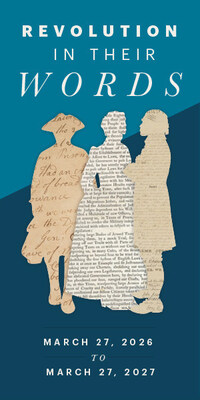
WASHINGTON, March 18, 2026 /PRNewswire/ -- Revolution in Their Words will open at the Daughters of the American Revolution (DAR) Museum to further celebrate the nation's 250th anniversary. Located in DAR's historic headquarters building near the National Mall, the new Museum exhibit is a collection of personal voices declaring their discontent with British rule and describing their everyday lives in their own words. A complementary exhibit, Preserving Patriotism: The Declaration of Independence and Its Legacy at DAR, displays signatures from all 56 signers of the Declaration of Independence, a rare collection never before shown together at the DAR Museum.
Beginning in the 1760s, a full range of colonists, from wealthy merchants to backcountry settlers, penned revolutionary thoughts and words. Many appeared in pamphlets, newspapers, diaries and letters. Revolution in Their Words showcases these writings and more in four sections in the new exhibit: words of diplomacy, words of the people, words of resistance, and words in print.
Alongside prominent figures such as John Hancock, the Revolution in Their Words exhibit allows today's visitors to experience the Revolution through the voices of ordinary individuals, including free and enslaved Black people, Native Americans, women, and soldiers serving on the front lines.
"It's gratifying to shed rare light on such a wide assortment of narratives from real people who experienced the Revolution," said Carrie Bough, DAR curator of Revolution in Their Words. "We see in this exhibit what these farmers and fisherman, wives and warriors, as well as enlisted and enslaved people were thinking and feeling, literally 'in their own words.' This is an extraordinary glimpse into the minds of some of the many Patriots who contributed to the freedom we still celebrate today, 250 years after it was hard won."
DAR Museum visitors can read personal accounts including the diary of John Fisher of Connecticut who wrote "the riflemen went over to long island" on Aug. 26, 1776. They'll see the words of Moses Short, a farmer from Massachusetts, who wrote that it was "fair" on Oct. 3, 1778, a day when his activities included pulling flax, hauling hay and other farm chores before he "enlisted to Day to Serve a Soldier."
Other displays in the exhibit include the 6th Virginia Regiment's "Order of the Day Book" which was kept from 1776 to 1778 and lists the daily activities of the regiment. The entry for July 24, 1776, states "The declaration of Independence is to be proclaimed tomorrow in the City of Williamsburg . . . when all the Troops of duty are to attend from Different Corps."
Revolution in Their Words showcases the power of the written word at a time when the American colonies had the world's highest literacy rate, nearly 90% in New England. Almost 150 newspapers were in print as well as pamphlets and books which collectively disseminated ideas and information. The new Museum exhibit profiles the Revolution with firsthand accounts from the people who lived it.
Alongside the new exhibit will be a collection of signatures from all 56 signers of the Declaration of Independence. Never before shown together in their entirety at the DAR Museum, Preserving Patriotism: The Declaration of Independence and Its Legacy at DAR is among the most prized documents in the DAR Americana Collection. Spanning six decades, the autographs are represented in letters, legal documents and receipts from all 56 men, representing merchants, businessmen, tradesmen and one minister. On view in the DAR Museum Study Gallery, an educational area leading into the main exhibition which further explores the Museum's holdings, this rare collection includes:
- a letter from Benjamin Franklin (to his wife, Deborah, addressed "My dear Child," introducing Miss Farquarson and Miss Smith, a milliner and a dressmaker);
- a ship pass from John Adams (issued in French, Spanish, English, and Dutch) for the schooner "Hornet" of Baltimore, bound for Hispaniola (present day Haiti and Dominican Republic); and
- a note from Thomas Jefferson (who was Secretary of State, to Mr. Thomas Pinckney, Ambassador to Great Britain, Philadelphia, Pennsylvania, May 16, 1792).
Revolution in Their Words and the accompanying display, Preserving Patriotism, will open at the DAR Museum on Friday, March 27, 2026, and will be on exhibit through March 27, 2027. Located at 1776 D Street NW, Washington, DC 20006, the Museum is free and open to the public Monday to Friday, 10 a.m. to 4 p.m. and Saturday, 10 a.m. to 5 p.m.; closed Sundays.
The public is invited to an opening reception celebrating the new exhibit on Thursday March 26 from 4 to 6 p.m. For information visit the DAR Museum website. To RSVP for the opening reception, visit the DAR Museum events page.
Organizations which loaned content for DAR Museum's new exhibit include The American Antiquarian Society, The Colonial Williamsburg Foundation, and the National Archives and Records Administration.
About the DAR Museum
The DAR Museum, located in the DAR National Headquarters, in Washington D.C. collects, preserves, and interprets objects used and created in American homes. Using the lens of the varied interpretations of home, the DAR Museum inspires conversations about the diverse American experience encouraging people to discover common ground.
Free and open to the public, Monday - Friday, 10 a.m. to 4 p.m. and Saturday, 10 a.m. to 5 p.m., closed Sundays, federal holidays and for street closures and inclement weather, the DAR Museum is a decorative arts museum. It collects furnishings, ceramics, glass, textiles, and household items that were made and used in America through the early 20th century. The Museum showcases 31 period rooms (each arranged to look like a different time and place in American history) through guided tours, a main gallery with an exhibit that changes annually accessible anytime during open hours, and a study gallery where visitors can get close to the museum objects. The exhibition is available during open hours and does not require a reservation. Guided Explorations of the Period Rooms can be scheduled on Dar.org/museum.
About the National Society of the Daughters of the American Revolution (DAR)
The National Society Daughters of the American Revolution was founded in 1890 to preserve the memory and spirit of those who contributed to securing American independence. Any woman 18 years or older, regardless of race, religion, or ethnic background, who can prove lineal descent from a Patriot of the American Revolution is eligible for membership. Through the DAR Genealogical Research System (www.dar.org/GRS), the public can access a free database of information amassed by the DAR about these Patriots. One of the largest patriotic women's service organizations in the world, DAR has 190,000 members in approximately 3,000 chapters across the country and several foreign countries. DAR members promote historic preservation, education and patriotism via commemorative events, scholarships and educational initiatives, citizenship programs, service to veterans, meaningful community service and more. For additional information about DAR and its relevant mission, visit www.dar.org.
Media Contact:
Daughters of the American Revolution
Veronica La Du
240-673-2813
vladu@dar.org
 View original content to download multimedia:https://www.prnewswire.com/news-releases/daughters-of-the-american-revolution-dar-museum-opens-new-exhibit-revolution-in-their-words-showcasing-the-words-of-ordinary-people-as-they-experienced-events-of-the-american-revolution-302717714.html
SOURCE Daughters of the American Revolution

