
Understanding How Build Order Influences Stability, Access, and Lasting Results
Sarasota, United States - January 30, 2026 / GreenTech Landscape Management /
Homeowners planning a landscape project often face an early decision that feels simple on the surface. Should construction begin with planting or with built elements such as walkways and patios. This choice influences how the property functions during installation and how well the finished landscape performs over time.
In Florida, where soil conditions, rainfall, and access constraints are part of everyday reality, sequencing carries added weight. Installing elements out of order can limit access, disrupt soil structure, or require later adjustments that were not anticipated. Many homeowners make this decision based on visual priorities or timeline expectations without understanding how build order affects outcomes.
This question is explored in a broader planning context in the article Hardscaping Design and Installation for Florida Coastal Landscapes, which outlines how construction choices influence long-term performance across coastal properties.
Why Landscape Sequencing Is Often Underestimated
Landscape projects are frequently viewed as collections of individual features rather than connected systems. Homeowners may focus on what they want to see finished first, not how the order of work affects the site as a whole. In Florida, this perspective can create challenges that only appear later.
Planting before major construction can expose soil and root systems to compaction from equipment. Access paths may cut through finished areas, leading to unnecessary disturbance. In other cases, built elements installed after planting require excavation that alters grades and drainage patterns.
Sequencing also affects how water moves during and after construction. Florida properties experience frequent rainfall, even outside of storm events. If grading and hardscape surfaces are not established first, temporary water flow can influence soil behavior and plant health in ways that are difficult to reverse.
Because these effects develop gradually, sequencing decisions are rarely revisited. The result is a landscape that functions, but with compromises that could have been avoided through more deliberate planning.
How Build Order Influences Planning Outcomes
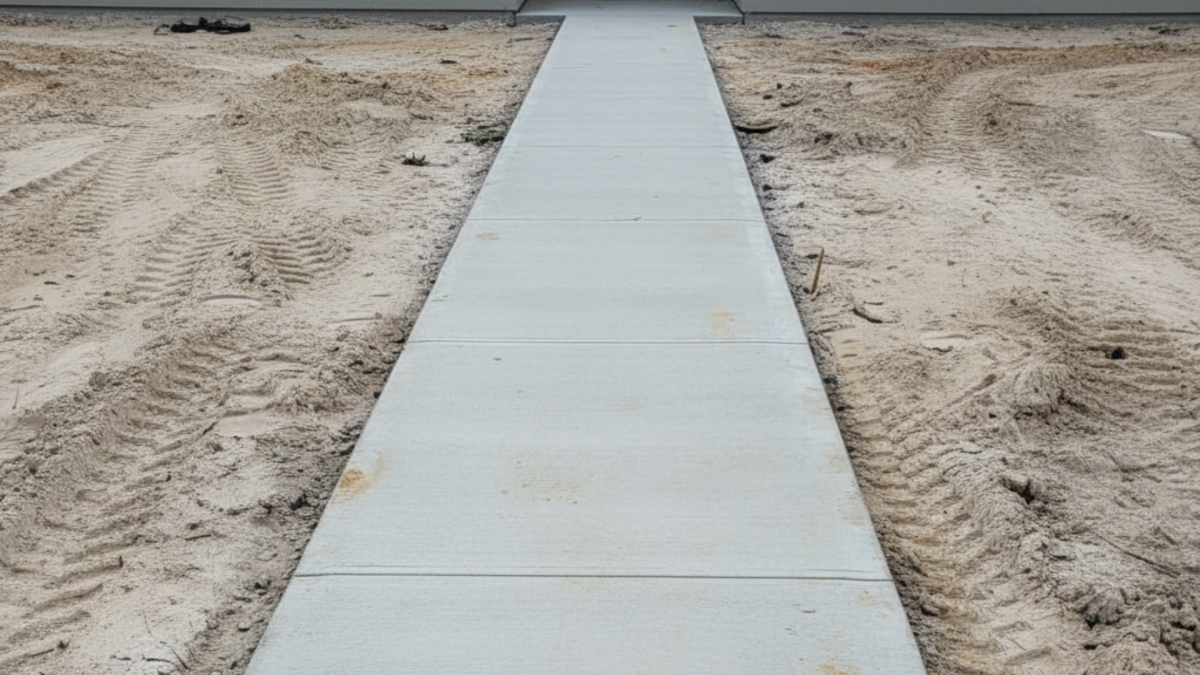
The sequence of installation shapes expectations around timelines, access, and coordination between systems. Hardscape construction typically involves excavation, base preparation, and grading. Completing this work first establishes stable elevations and surfaces that support everything that follows.
When planting occurs after these elements are in place, soil conditions can be adjusted accurately. Plants are installed with full awareness of drainage paths, sun exposure, and final grades. This alignment supports healthier establishment and reduces the likelihood of relocation or replacement.
Sequencing also affects how systems interact. Irrigation design depends on finalized layouts. Drainage behavior relies on completed surfaces and slopes. Lighting placement depends on the location of walkways and structures. When these elements are sequenced intentionally, coordination improves and adjustments become less disruptive.
From a planning standpoint, sequencing also clarifies construction phases. Expectations around access and site conditions are easier to manage, reducing uncertainty during the project.
How Sequencing Decisions Are Evaluated in Practice
In real projects, sequencing decisions are evaluated through observation of the site rather than assumptions. Existing grades, soil conditions, and access points shape how work can proceed efficiently and with minimal disruption.
GreenTech Landscape Management approaches sequencing by considering how each phase affects the next. Hardscape construction, grading, and drainage-related work are evaluated early because they establish the physical framework of the property. Planting, irrigation, and finishing details are then aligned with that framework.
This approach treats the landscape as a system rather than a series of isolated installations. Decisions are guided by how elements interact over time, not just during construction. Additional context on this planning philosophy is reflected on the main site for GreenTech Landscape Management.
Factors That Influence Sequencing on Florida Properties
Several property-specific factors influence sequencing decisions in Florida. Soil composition affects how surfaces hold up under construction activity. Access limitations determine where equipment can move without disruption. Rainfall patterns influence when grading and base preparation are most effective.
Coastal properties may also face space constraints that make rework difficult. Establishing hardscape elements early can provide defined access routes and stable work areas for later phases. These considerations align closely with services focused on structural layout and water movement, as outlined on the hardscaping services.
By accounting for these factors early, sequencing decisions support smoother execution and more predictable outcomes.
Communication and Local Project Awareness
Clear communication plays an important role in sequencing decisions. Homeowners benefit from understanding how each phase affects the next and why certain steps are prioritized. Transparent discussion of access, timing, and site conditions helps align expectations throughout the project.
GreenTech Landscape Management maintains a consistent presence across Sarasota and nearby coastal communities, applying local knowledge to each property. Familiarity with regional conditions informs how sequencing decisions are explained and implemented.
Additional context on this local role can be found through this locally based landscaping company serving the Sarasota region, which provides background on the company’s connection to the area.
Preventing Problems Through Early Sequencing Decisions
Sequencing is not about preference. It is about preventing issues that emerge when construction order is overlooked. Compacted soil, disrupted grades, and mismatched systems often trace back to early decisions that did not account for how elements interact.
By addressing sequencing early, homeowners reduce the risk of rework, plant stress, and long-term performance issues. The landscape develops within a stable framework rather than being adjusted repeatedly after installation.
GreenTech Landscape Management continues to approach sequencing as a planning tool that supports durability and predictability. When build order is considered from the outset, landscapes are better positioned to perform consistently under Florida conditions, avoiding many of the challenges that surface when sequencing is left to chance.


Contact Information:
GreenTech Landscape Management
3969 Sawyer Rd., Sarasota, FL 34233
Sarasota, FL 34233
United States
Contact GreenTech Landscape Management
https://www.greentechgardeners.com/


Original Source: https://greentechgardeners.com/media-room/#/media-room
