
Protecting Equipment Integrity During Winter Using NDT Surface Testing
Florence, United States - February 13, 2026 / Newco /
Winter industrial inspections present unique challenges that can compromise safety and efficiency. This article explores how Magnetic Particle Testing (MPI) and Liquid Penetrant Testing (LPT) enhance safety during these critical inspections. Readers will learn about the specific challenges posed by cold weather, the benefits of these nondestructive testing methods, and the safety protocols that technicians should follow. As industrial operations continue in colder months, understanding these testing methods becomes essential for maintaining safety standards and operational integrity.
The critical role of NDT in preventing industrial failures during winter, particularly for high-pressure equipment, is well-documented.
What Are the Key Challenges of Magnetic Particle and Liquid Penetrant Testing in Cold Weather?
Cold weather significantly impacts the effectiveness of nondestructive testing methods like Magnetic Particle Testing (MPI) and Liquid Penetrant Testing (LPT). Understanding these challenges is crucial for ensuring accurate inspections and maintaining safety.
How Does Cold Temperature Affect Penetrant Viscosity and Drying Times?
Cold temperatures can increase the viscosity of penetrants, making them thicker and less effective at penetrating surface defects. This change can lead to extended drying times, which may delay inspections and affect the reliability of results. For instance, a typical penetrant that dries in 10 minutes at room temperature may take significantly longer in colder conditions, potentially compromising the inspection timeline and accuracy. However, some penetrants are formulated to maintain performance at lower temperatures.
What Impact Does Winter Have on Magnetic Particle Adhesion and Detection Accuracy?
Winter conditions can adversely affect the adhesion of magnetic particles used in MPI. Low temperatures may cause particles to clump or fail to adhere properly to the surface being tested, leading to inaccurate detection of flaws. This can result in missed defects that could compromise safety. Best practices for winter MPI include using specialized equipment designed for cold weather and ensuring that surfaces are adequately prepared and warmed if necessary to enhance particle adhesion.
Indeed, the challenges of performing MPI in frigid conditions have been recognized for decades, as highlighted by early practical guides.
How Does Magnetic Particle Testing Improve Safety During Winter Industrial Inspections?
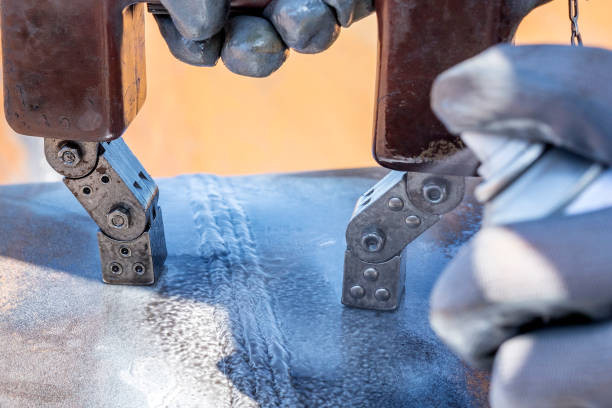
Magnetic Particle Testing (MPI) is a vital method for detecting surface and near-surface defects in ferromagnetic materials. Its effectiveness is particularly pronounced in winter conditions when safety is paramount.
What Are the Principles and Benefits of MPI in Cold Environments?
MPI works by magnetizing the test object and applying ferromagnetic particles to the surface. When a defect is present, the magnetic field is disrupted, causing the particles to cluster at the flaw, making it visible. The benefits of MPI in cold environments include its ability to detect critical defects that could lead to catastrophic failures, thus enhancing safety. Additionally, MPI is quick and can be performed on-site, making it ideal for winter inspections.
Which Specialized MPI Equipment Supports Reliable Winter Inspections?
Specialized MPI equipment designed for cold weather includes portable magnetic particle testers and heaters or warming devices that maintain optimal temperatures for testing. These tools ensure that the magnetic field remains effective and that particles adhere properly, even in frigid conditions. Using such equipment can significantly improve the reliability of inspections during winter months, ensuring that safety standards are met.
How Can Liquid Penetrant Testing Be Optimized for Effective Cold Weather Inspections?
Liquid Penetrant Testing (LPT) is another essential nondestructive testing method that can be optimized for winter conditions. By making specific adjustments, technicians can enhance the accuracy and reliability of LPT in cold weather.
What Procedural Adjustments Enhance LPT Accuracy in Low Temperatures?
To optimize LPT in low temperatures, technicians should consider adjusting dwell times and cleaning procedures. Increasing the dwell time allows the penetrant to seep into defects more effectively, while thorough cleaning ensures that any contaminants do not interfere with the test results. These adjustments are crucial for maintaining the integrity of the inspection process in cold weather. Additionally, warming the test surface or using heated penetrants can improve performance.
Further research emphasizes that optimizing these procedural aspects, including thermal effects, significantly enhances the sensitivity and efficiency of penetrant testing methods.
Which Low-Temperature Penetrants and Consumables Are Recommended?
Using low-temperature penetrants specifically formulated for cold conditions can significantly enhance testing accuracy. Recommended products include those with lower viscosity and faster drying times, which are designed to perform well in winter environments. These specialized consumables help ensure that inspections yield reliable results, even in challenging conditions.
Low-Temp Penetrant A: Low viscosity with a 5-minute drying time, ideal for cold environments.
Low-Temp Penetrant B: Medium viscosity with a 10-minute drying time, suitable for moderate cold conditions.
Low-Temp Penetrant C: High viscosity with a 15-minute drying time, best for extreme cold environments.
This shows the effectiveness of various low-temperature penetrants, highlighting their suitability for winter inspections.
What Safety Protocols Should NDT Technicians Follow for Winter Industrial Inspections?
Safety protocols are essential for Nondestructive Testing (NDT) technicians working in winter conditions. Adhering to these protocols ensures not only the safety of the technicians but also the integrity of the inspection process.
How Does Proper PPE and Cold Stress Management Protect Technicians?
Proper Personal Protective Equipment (PPE) is crucial for technicians working in cold environments. This includes insulated gloves, thermal clothing, and face protection to prevent cold stress and hypothermia. Additionally, implementing cold stress management techniques, such as regular breaks in warm areas, can help maintain technician safety and performance during inspections.
Indeed, research consistently shows that working in cold environments significantly increases the risk of accidents and injuries compared to warmer conditions.
Cold Environment Work Safety & Accident Prevention
Working in the cold environment is more dangerous than the same type of work in a warmer climate. All researchers have concluded that the frequency of accidents/versus temperature curves follow the U-shape with the minimum near 20℃. The effects of low temperature can be divided into direct, typically frostbites, and indirect, of which the indirect effects, typically slipping accidents, are more common.
What Pre-Inspection Planning Ensures Safe and Effective Winter NDT?
Effective pre-inspection planning is vital for ensuring safe and efficient winter NDT operations. Key steps include assessing weather conditions, preparing equipment for cold temperatures, and conducting safety briefings to inform technicians of potential hazards. By taking these precautions, organizations can enhance the safety and effectiveness of their winter inspections.
In summary, understanding the challenges and optimizing the methods of Magnetic Particle and Liquid Penetrant Testing are crucial for enhancing safety during winter industrial inspections. By following proper protocols and utilizing specialized equipment, organizations can ensure that their inspections are both effective and safe.

Contact Information:
Newco
121 Aberdeen Dr
Florence, SC 29501
United States
Josh Beavers
https://www.newcoinc.com/

Original Source: https://www.newcoinc.com/media-room/#/media-room
